 |
 |
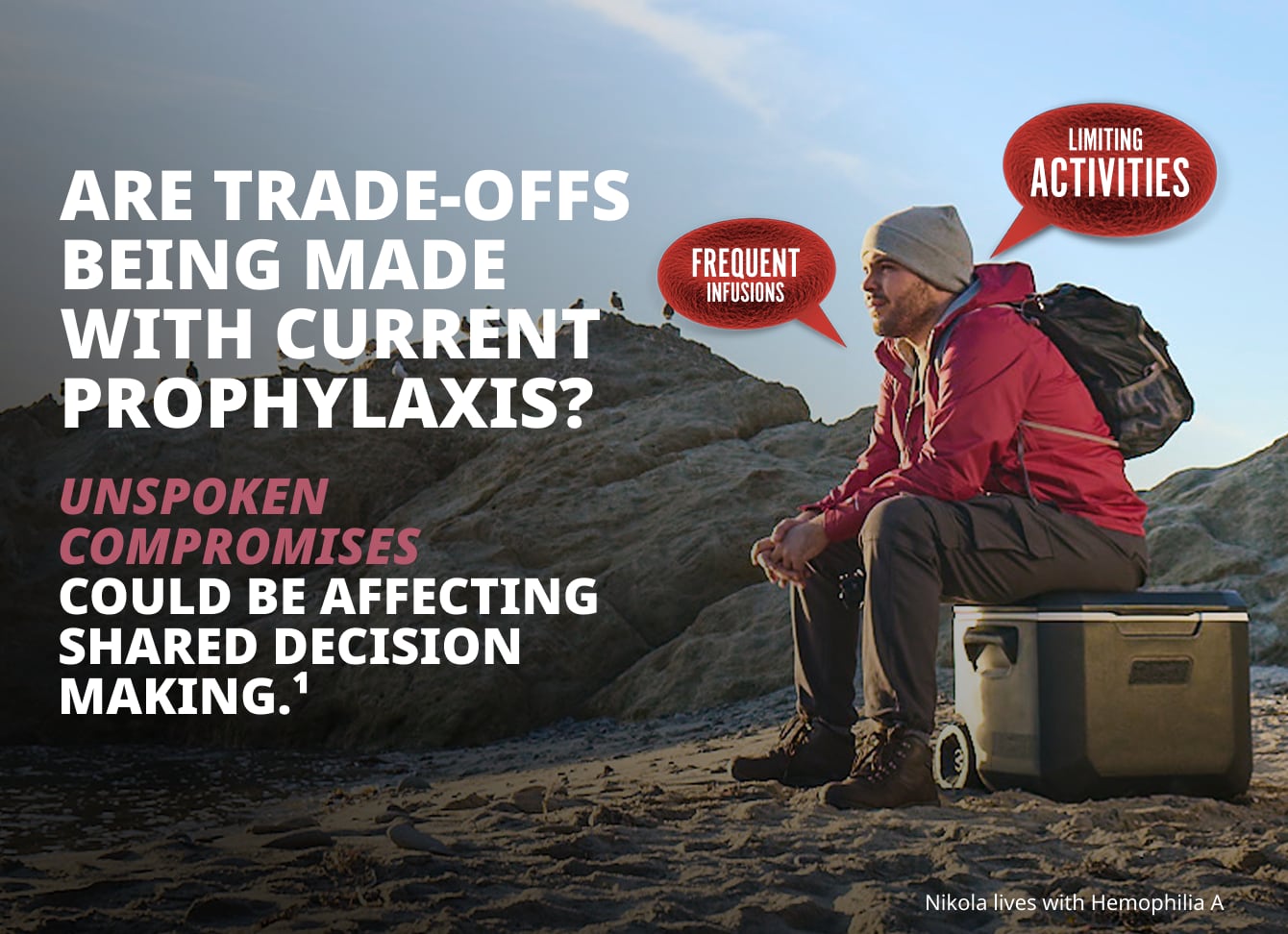
| Are trade-offs being made with current prophylaxis? |
| Unspoken compromises could be affecting shared decision making.1 |
|
|
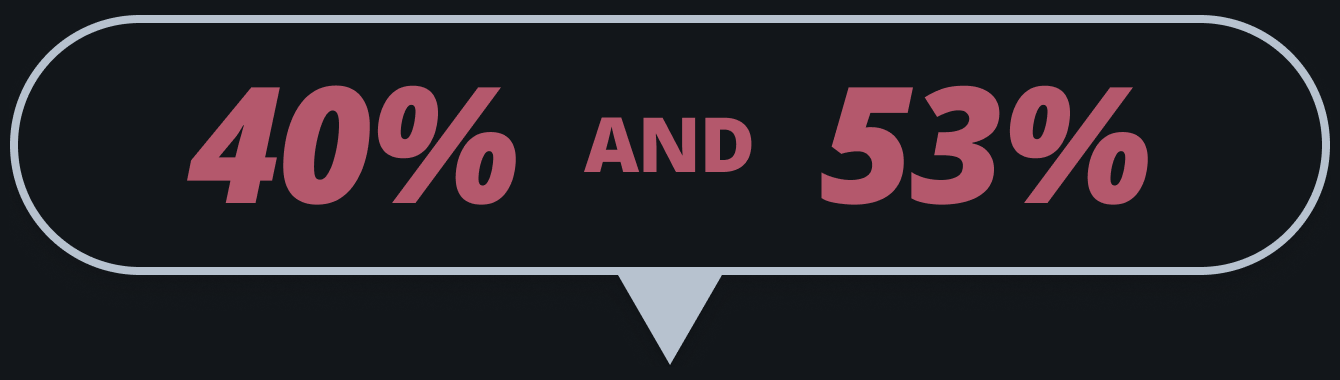
| Not all physicians were completely satisfied with current prophylaxis.2 |
| In real-world study with 62 physicians, |
|
|
|
| Reported not being completely satisfied with FVIII Mimetic or EHL Prophylaxis, respectively.2,a |
|
|
aPhysicians responded on a 5-point scale: Completely dissatisfied, Dissatisfied, Neither satisfied nor dissatisfied, Satisfied, or Completely satisfied. The number of physicians who reported being "satisfied" with current treatment is unknown.
Questions asked: "Please indicate your overall satisfaction with the current treatment in terms of how well it manages the patient’s hemophilia" and "Why are you not completely satisfied with the patient's current prophylactic treatment".
The study is limited to patients seeking hemophilia care, with potential bias toward those with severe illness or higher healthcare interaction. Additionally, the cross-sectional design limits tracking changes over time.1 |
| The objective of this study was to use the Adelphi Real World (ARW) hemophilia Disease Specific Programme (DSP)™ to gain insights into the real-world characteristics and unmet needs of patients with hemophilia A and B within the current treatment landscape in the United States. From July 2023 to February 2024, 62 physicians who treat and manage patients with hemophilia were identified by ARW through local fieldwork partners. Both the recruited physicians and their patients subsequently completed the survey, which included data from 423 patients (348 with hemophilia A and 75 with hemophilia B). The comprehensive observational survey utilized online physician surveys and self-completion questionnaires for patients and caregivers, employing validated instruments such as EQ-5D-5L, WPAI, Haemo-QoL, and joint health assessment tools (eg, FISH, HJHS). |
|
|
|
We’ve heard the concerns of your peers...
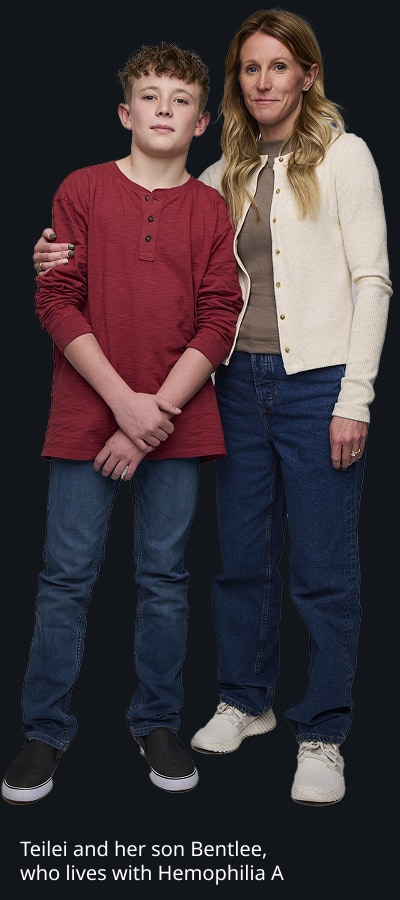
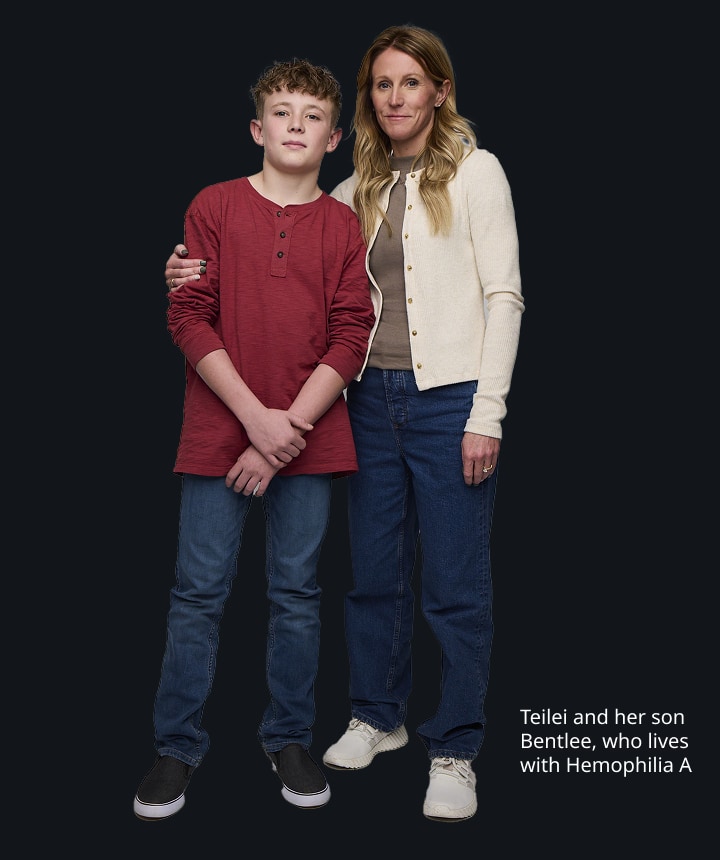
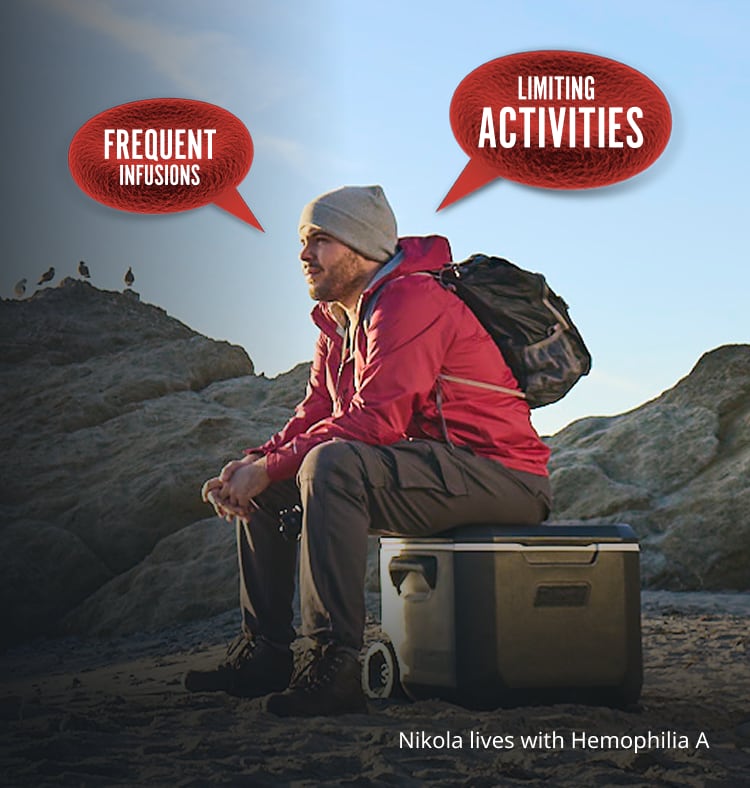
But What about your patients? |
| According to the World Federation of Hemophilia, fostering in-depth discussions with your patients may help uncover physical or emotional burdens.3 |
| In addition to the data, we’ve listed some questions and conversation-starters that could help you discover what patients feel they are getting—and what they may be missing. |
|
|
| References: |
| 1. |
Srivastava A, Santagostino E, Dougall A, et al. WFH Guidelines for the Management of Hemophilia, 3rd edition [published correction appears in Haemophilia. 2021;27(4):699]. Haemophilia. 2020;26(suppl 6):1-158. |
| 2. |
Data on file. Novo Nordisk Inc; Plainsboro, NJ. |
| 3. |
WFH Shared Decision Making Tool: The Role of the Healthcare Team. World Federation of Hemophilia. Last reviewed: August 2024. Accessed September 8, 2024. https://www1.wfh.org/publications/files/pdf-2371.pdf |
|
|
| Please do not respond to this email. If you would like to contact us, please click here or call 1‑877‑744‑2579. |
| UNSUBSCRIBE NOTICE |
| If you no longer want to receive communications from Novo Nordisk, click here to unsubscribe. You also may call us at 1-877-744-2579 or send us a letter that includes your full contact information (eg, name, email address, phone) to Novo Nordisk, 800 Scudders Mill Road, Plainsboro, New Jersey 08536. To better understand how Novo Nordisk values your privacy, see our Privacy Statement. |
|
Novo Nordisk is a registered trademark of Novo Nordisk A/S.
Non-US Health Care Professionals, please go to pro.novonordisk.com.
© 2025 Novo Nordisk All rights reserved. US25HRBD00115 July 2025 |
 |
|
|
|